Views: 0 Author: Site Editor Publish Time: 2026-09-15 Origin: Site
Selecting the wrong agglomeration equipment ruins your production efficiency. High recycle rates and inconsistent pellet sizing quickly inflate your daily operating expenses. You need highly reliable systems to stay competitive in the agricultural market. Plant managers often struggle to match equipment directly to specific material behaviors. Your target throughput and facility footprints also impose strict limits on installation options. Choosing incorrectly leads to endless operational bottlenecks. It also causes wasted capital over the lifespan of the plant. This guide breaks down the harsh operational realities of different granulation systems. You will discover the technical trade-offs and integration constraints for these core machines. We provide clear, data-driven insights. They will help you finalize your capital expenditure decisions confidently.
Capacity: Rotary drum granulators excel in high-capacity, continuous operations (e.g., large-scale NPK plants), while disc granulators offer superior control for mid-to-low capacity runs.
Footprint & Integration: Disc granulators require vertical clearance and less floor space; rotary drums demand significant horizontal footprint and robust foundation support.
Material Control: Disc granulators provide visual, real-time adjustments. Drum granulators are enclosed, requiring stricter upstream feed control but offering better containment for hazardous or dusty materials.
A Fertilizer Granulator determines the final quality of your product. You must understand how they operate fundamentally before making a purchase.
A Rotary Drum Granulator relies on continuous tumbling action. It processes raw materials inside a large rotating cylinder. Operators introduce binders and liquids through internal spray pipes. This creates a thick rolling bed of material. Particles agglomerate aggressively as they tumble continuously.
The tumbling action relies on critical speed calculations. If the drum rotates too fast, centrifugal force pins the material to the walls. If it rotates too slowly, you lose the cascading effect necessary for proper coating.
Reality check: These machines demand a steady state. You need stable feed rates to achieve optimal yields. The startup and shutdown phases generate more off-spec material. We recommend keeping them running constantly to maximize efficiency.
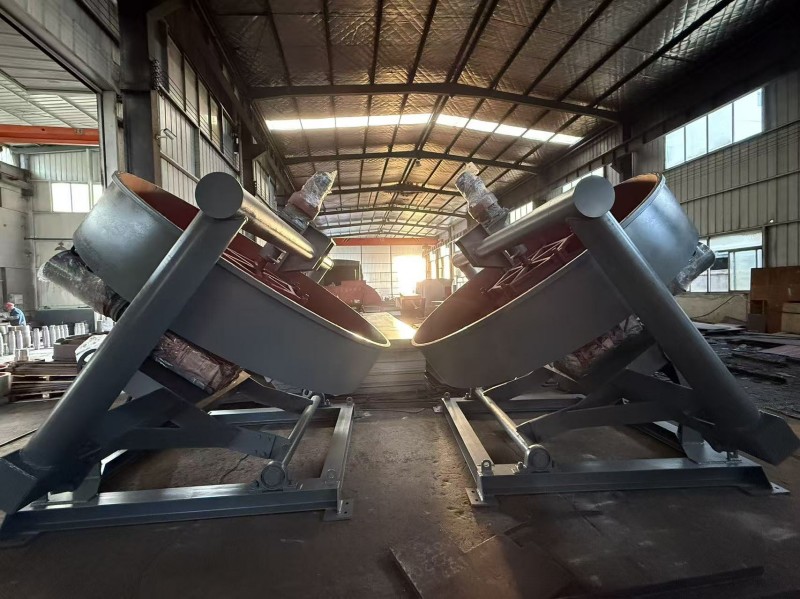
A Disc Granulator uses an inclined, rotating pan. It relies heavily on centrifugal force and gravity. These forces classify pellets naturally during operation. Smaller particles stay near the bottom to grow. Finished pellets roll off the rim automatically once they reach the target size.
The inclined angle allows you to manipulate residence time directly. A steeper angle ejects pellets faster. A shallower angle retains them longer for additional growth. This flexibility proves invaluable when testing new recipes.
Reality check: This system is highly sensitive to feed rate changes. Moisture fluctuations disrupt the process quickly. Operators must monitor it actively. However, you can adjust the pan angle and speed instantaneously.
Different chemical formulations react uniquely during agglomeration. You must evaluate these specific sensitivities carefully.
Disc systems are ideal for narrow particle size distributions. They provide gentle agglomeration. This makes them excellent for organics and soil amendments. Specialty micro-nutrients also benefit immensely from this precise control. The open-air tumbling prevents light materials from crushing themselves.
In contrast, drum systems handle aggressive chemical reactions easily. They are built for heavy-duty compound fertilizers like NPK. NPK production often involves highly corrosive inputs. The specialized internal lining resists this chemical attack effectively. You can introduce steam directly into the drum bed. Ammonia sparging also works seamlessly inside the enclosed cylinder.
Assess your required liquid-to-solid ratio closely. Drum systems manage higher liquid additions safely. They do not suffer from severe blinding issues. Manufacturers install internal flexible rubber liners in them. These liners flex during rotation to prevent sticky material buildup.
Disc systems require highly precise liquid application. Over-wetting disrupts the rolling action immediately. It causes thick mud-ringing across the pan surface. Built-in scraper systems help somewhat. However, scrapers cannot save a severely over-wetted batch from failing.
Formulation Compatibility Summary
Application Criteria | Disc Systems | Drum Systems |
|---|---|---|
Optimal Formulations | Organics, micro-nutrients, soil amendments | NPK, heavy chemical compounds |
Liquid Tolerance | Low to moderate; requires precision | High; accepts steam and ammonia sparging |
Agglomeration Action | Gentle, highly classified rolling | Aggressive tumbling and chemical reaction |
Buildup Prevention | Adjustable mechanical scrapers | Internal flexible flexing liners |
Integrating new Fertilizer Equipment into an existing workflow requires careful spatial planning.
Upstream dependencies dictate your operational success entirely. Drum systems demand highly consistent upstream dosing. Any variation disrupts the rolling bed dynamics severely. Disc systems can tolerate slight feed variations better. Manual adjustability allows your operators to compensate quickly.
Downstream processing also differs significantly. Both systems require extensive drying and cooling stages. However, drum output typically has a wider size distribution. This reality creates a larger screening requirement. You will likely need a more extensive recycle loop compared to the tighter size control of a disc. Consider your material handling conveyors carefully. Drums require heavy-duty bucket elevators to manage the massive recycle load. Discs typically pair well with simpler belt conveyors.
Physical plant dimensions often force your ultimate decision. Drum installations require massive horizontal space. They rely on heavy-duty trunnion wheels to rotate properly. You must pour reinforced concrete foundations to support them safely. The sheer dynamic weight of the equipment is substantial.
Disc installations have a much smaller horizontal footprint. They fit easily into tighter floor plans. However, they require significant overhead clearance. You must leave adequate vertical space for gravity feed chutes. Proper exhaust hoods also demand ample ceiling height to remove dust safely.
Financial constraints dictate every major equipment purchase. You must evaluate initial capital expenses and ongoing operating costs rigorously.
Disc machines present a significantly lower barrier to entry. Their cost per unit of capacity remains highly attractive. Smaller operations often start here to minimize initial financial risks. You can install multiple smaller discs for less than one large drum.
Rotary drums represent a major infrastructural investment. The initial purchase price is substantial. Installation costs run high due to the heavy structural requirements. However, they offer unmatched durability. They shine in demanding 24/7 continuous operations where scale drives profitability.
Wear parts dictate your ongoing maintenance budgets.
Disc Scrapers: These require frequent adjustment. Operators must replace them regularly to maintain pan efficiency.
Drum Tires and Trunnions: These components are incredibly durable. However, they require specialized alignment. Drive pinions need precise lubrication schedules to avoid failure.
Power Consumption: Drum motors are massive. They require soft starters to overcome static inertia. Discs use fractional horsepower motors by comparison. They draw significantly less power per hour of operation.
Labor costs contrast sharply with automation capabilities. Disc systems require skilled operators for visual monitoring. A trained eye ensures consistent pellet quality. Modern drum systems run almost autonomously. Once tuned properly, they require minimal operator intervention during a shift.
Use clear, objective criteria to select the most suitable machinery for your specific application.
Choose this technology when flexibility and control dominate your daily requirements.
Your target throughput remains under 20 tons per hour (TPH).
Tight control over final pellet size is your primary quality metric.
Your facility produces multiple specialized batches weekly.
Your production schedule requires frequent changeovers and deep cleanouts.
Select this technology for heavy-duty, high-volume chemical processing.
Your daily throughput demands exceed 20 TPH, scaling up to 100+ TPH.
Your process involves intense chemical reactions during agglomeration.
You need continuous steam injection or high-temperature processing.
Your plant is designed for continuous, single-product manufacturing runs.
Always prioritize vendor material testing before procurement. Treat feasibility studies as mandatory investments. A small-scale pilot test reveals crucial material behaviors immediately. It prevents millions in wasted commercial-scale capital expenditure. Never buy based solely on theoretical specification sheets.
Neither granulation technology is universally superior. Your choice hinges strictly on specific operational intersections. You must balance capacity goals, material chemistry, and available capital carefully. We recommend moving beyond standard specification sheets immediately.
Here are your action-oriented next steps:
Demand rigorous pilot-scale testing from potential equipment manufacturers.
Supply your exact raw material blend for these performance tests.
Validate real-world yield rates before signing any purchase orders.
Confirm actual binder requirements and measure expected recycle ratios directly.
A: Generally, rotary drum granulators have a higher recycle ratio. It often ranges from 2:1 to 4:1. This compares unfavorably to disc granulators. Because of this, drum systems require much larger downstream screening and crushing equipment to handle the recirculating load effectively.
A: Yes, but typically only for cold-granulation processes. They also work for low-capacity specialty runs. Large-scale chemical NPK production almost exclusively utilizes rotary drums. This is due to the strict need for internal steam and ammonia sparging during the reaction phase.
A: Disc granulators have shorter, more frequent maintenance stops. Operators clean the pan and adjust scrapers routinely. Rotary drums have much longer intervals between maintenance. However, their specific tasks require significant planned downtime. Replacing a trunnion or repairing an internal liner takes substantial effort and time.